

FindingSquash Global Junior Mental Performance Workshop
2025-12-10
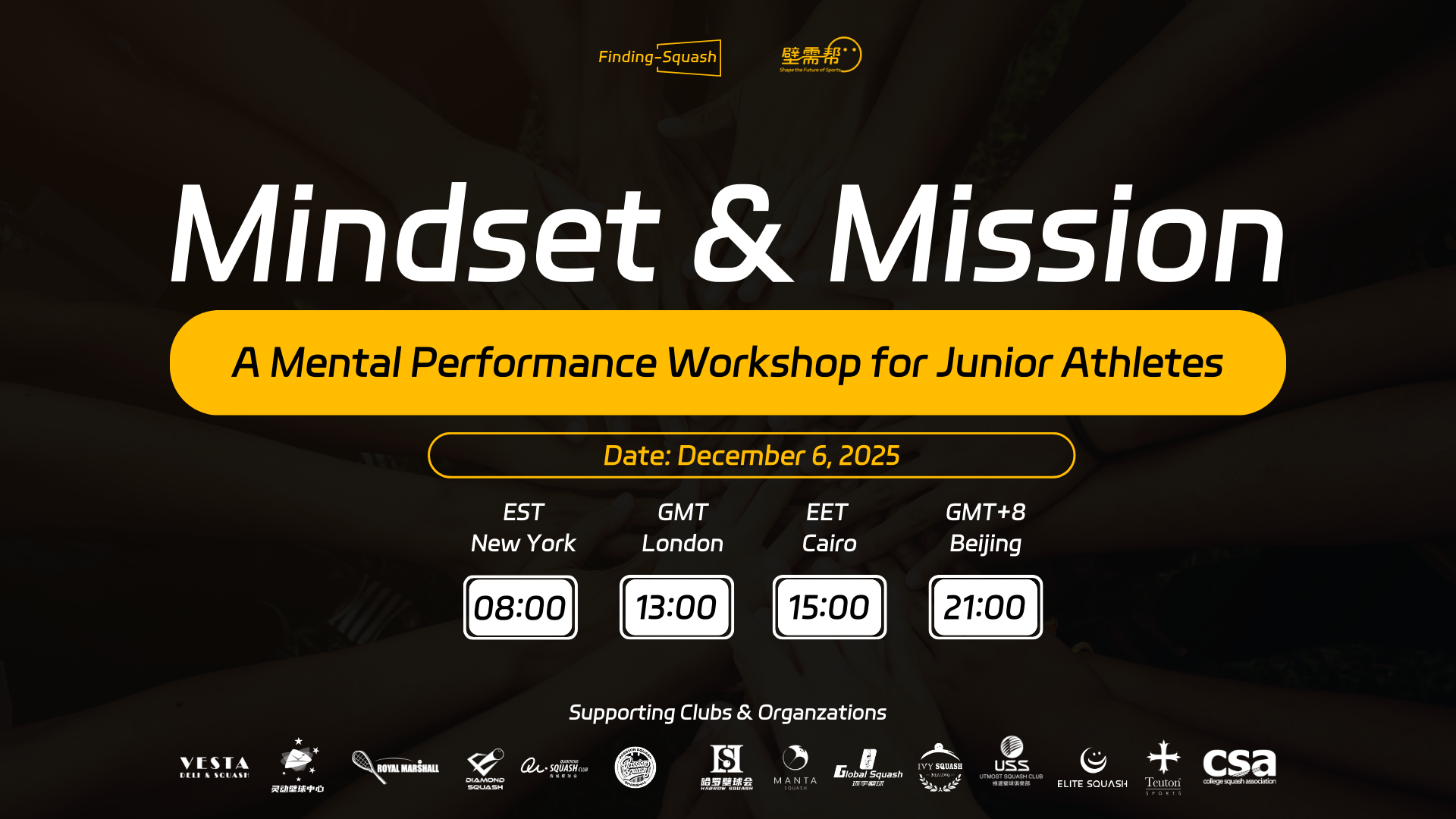
On December 6, 2025, FindingSquash organized a special global online workshop dedicated to strengthening the mental performance of junior athletes. More than 180 players, parents, and coaches from Asia, North America, Europe, and Africa joined us for an evening of world-class insights ahead of the 2025 junior competition season.
The workshop was hosted by Cameron Cassidy, a Grade 11 student at ISF Academy in Hong Kong and a member of the Hong Kong national squash team. Cameron has been playing squash for 5 years and brought professionalism and energy to the session. He also extended special thanks to the student ambassadors and FindingSquash for their dedication to advancing squash education globally.
The workshop brought together an exceptional lineup of speakers:
Coach Paul Assaiante, Coach David Campion, Captain Ashraf Hanafi, and World No.1 Nouran Gohar.
Below is a summary of the key messages from each speaker, followed by insights from our closing panel discussion.
Coach Paul Assaiante — “Sport Is a Lifetime Classroom”
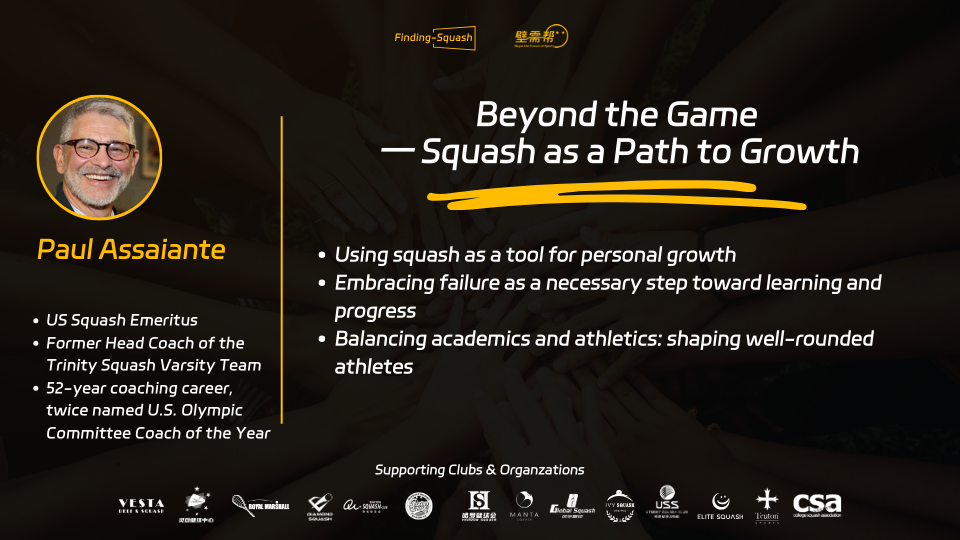
Coach Assaiante opened the session by reflecting on his 52 years in coaching. He reminded juniors and parents that squash is far more than a competitive pursuit — it is a lifelong classroom for learning how to win, lose, adapt, think clearly, and build resilience.
He highlighted the value of losing, urging athletes to embrace defeat as the most powerful source of growth. Losses should be followed by honest reflection: Was preparation lacking? Was strategy off? Or was the opponent simply better on the day?
He also reminded juniors hoping to study abroad that academics must come first: “You are student-athletes, not athletic students.”
His closing message was simple and powerful: enjoy the game, learn from it, and let it make you a better person.
Coach David Campion — “Pressure Is a Privilege”
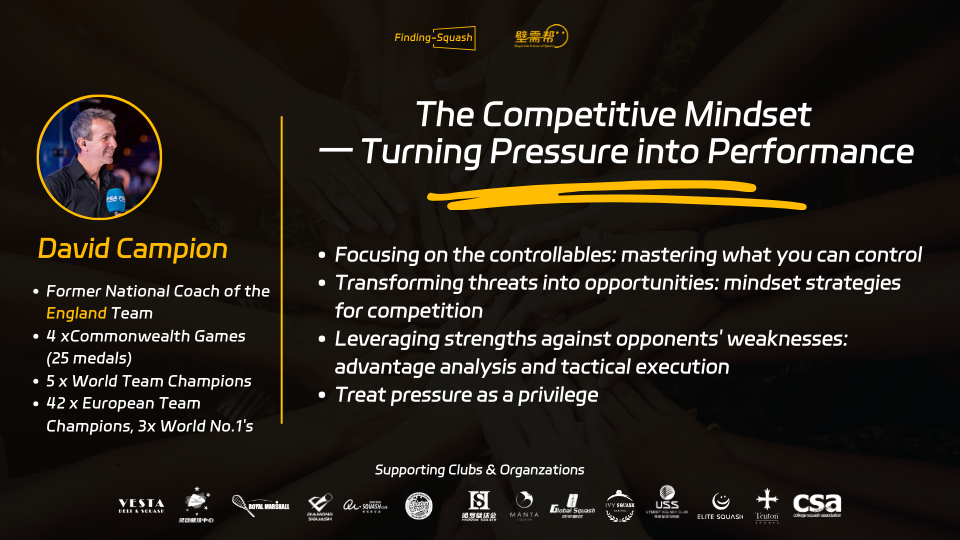
Coach Campion echoed the theme that failure is feedback — if you lose and learn, you still win.
He shared four practical mental strategies juniors can apply immediately:
Control the controllables: emotions, decisions, game plan — not referees, score, or conditions.
Turn threats into opportunities: adapt when opponents display superior strengths.
Use your strengths vs. their weaknesses: know your identity as a player.
Treat pressure as earned: competing in big moments is a privilege and a reward for preparation.
He encouraged juniors to trust their training and approach competition with freedom.
Captain Ashraf Hanafi — “Before, During, After: Your Three Games”
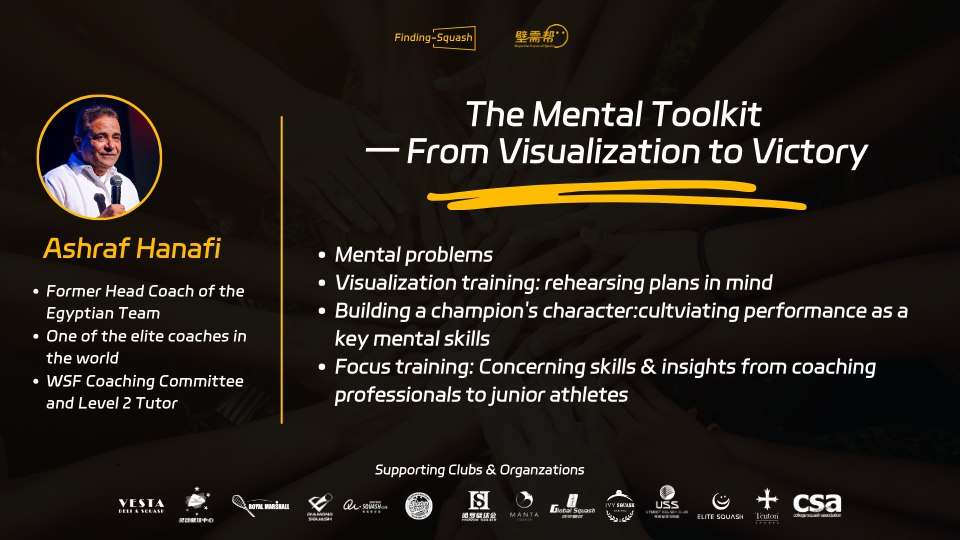
Captain Hanafi explained why many juniors perform well in training but struggle in matches: mental challenges often begin before stepping onto the court — fear, pressure, and overthinking.
He outlined three phases every athlete must manage:
Before the Match
Avoid overtraining.
Build confidence through quality preparation.
Visualize match scenarios.
Develop a tactical plan.
Focus on performance, not outcome.
During the Match
Simplify when stressed: solid length, good movement, fewer errors.
Warm up properly — physically and mentally.
Adjust if your plan isn’t working.
Use pace and height variation to disrupt opponents.
After the Match
Analyze with your coach: mental, tactical, technical.
Keep notes on opponents and matches.
Identify how much your level drops from training to competition
He emphasized that mental toughness is trainable — juniors grow into it over time.
Nouran Gohar — “Greatness Is a Lifestyle”

World No.1 Nouran Gohar shared three qualities that elevate good players to great ones:
Consistency: disciplined daily habits matter more than motivation.
Growth mindset: pressure and mistakes are information, not failure.
Emotional control: elite athletes manage nerves through routines and body language.
She reminded juniors that none of this requires talent — only choices made day after day.
Panel Discussion — Real Questions, Real Solutions
The session concluded with a panel discussion moderated by Lovey Roundtree (CSA), providing insights from all speakers, and answering participant questions.
Video clips from the session are available for review, offering a valuable resource for juniors, coaches, and parents worldwide.
Cameron reminded attendees that 100% of the proceeds from the event support victims of the recent HongKong fire, expressing heartfelt gratitude to everyone participating.
FindingSquash will continue to support the development of young players.